
introduction
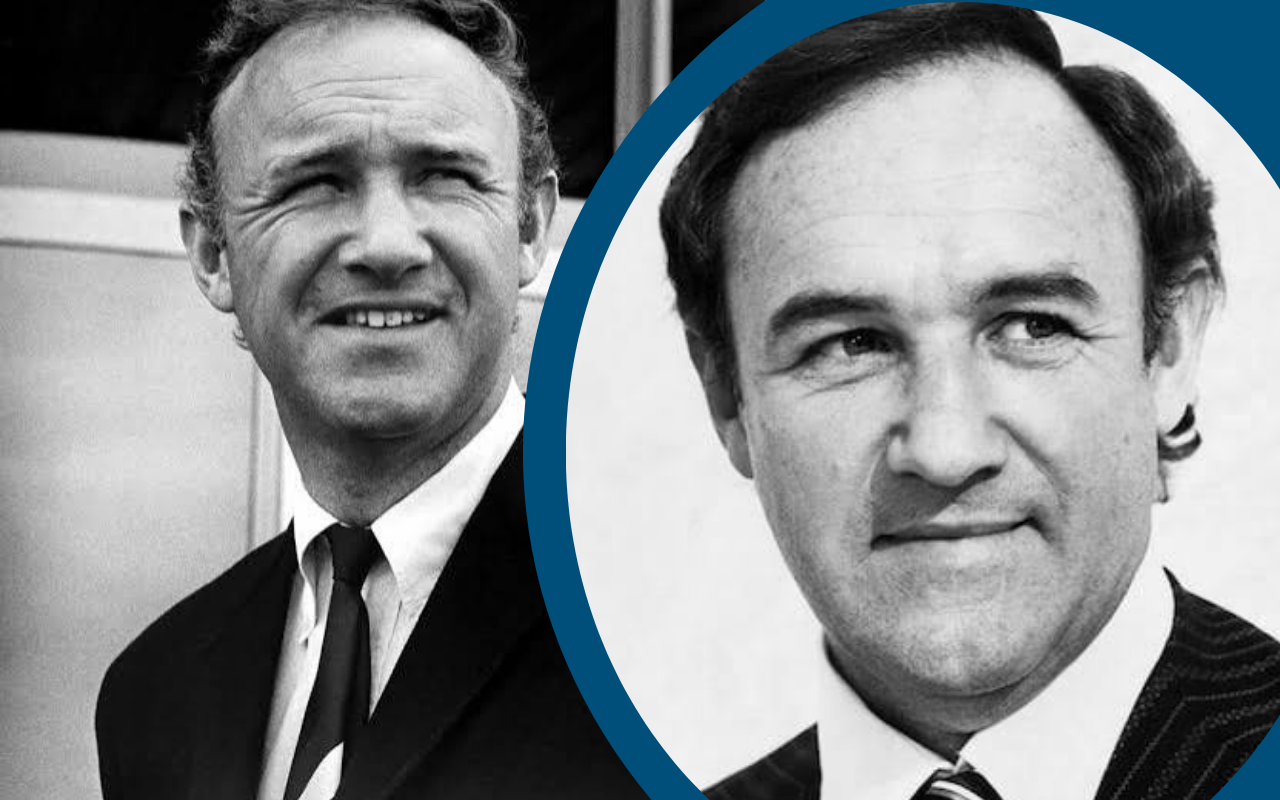
Gene Hackman became one of the most respected actors in American cinema, but his path to Hollywood success was far from immediate. When people remember Hackman today, they often think of major films such as The French Connection, The Conversation, Superman, Hoosiers, and Unforgiven. However, the foundation for that remarkable career was built during the 1960s, when Hackman was still a relatively unknown actor trying to establish himself.
The 1960s were especially important because Hackman moved from struggling stage performer to recognizable film actor during this period. He worked in theatre, appeared on television, accepted small movie roles and eventually received his first Academy Award nomination. His breakthrough came with Bonnie and Clyde in 1967, when he played Buck Barrow, the brother of Clyde Barrow. The role changed the direction of his career.
Hackman’s story during this decade is also unusual because he achieved major recognition later than many Hollywood stars. He was already in his thirties when he began making films, and his biggest breakthrough came when he was 37. His career demonstrates how persistence, stage experience and the willingness to accept smaller opportunities can eventually lead to major success.
Gene Hackman Before the 1960s
Gene Hackman was born on January 30, 1930, in San Bernardino, California. His early life was not connected to Hollywood success. As a teenager, he left home and joined the U.S. Marine Corps after lying about his age. After leaving the Marines, he explored other career possibilities before eventually deciding to pursue acting. He studied at the Pasadena Playhouse in California, where one of his fellow students was Dustin Hoffman.
Hackman and Hoffman became friends during their early acting years, and they later shared the experience of struggling to find steady work. Robert Duvall was also part of their wider circle of aspiring actors. Their friendship is often remembered because all three eventually became highly respected performers.
Hackman’s time at the Pasadena Playhouse was not an immediate success story. He and Hoffman were reportedly voted among the students least likely to succeed. Instead of giving up, Hackman returned to New York and continued pursuing acting. He worked various jobs to support himself while looking for opportunities in theatre and television.
By the beginning of the 1960s, Hackman had already spent years trying to establish himself. He was not an overnight Hollywood discovery. His early career was built through small roles, persistence and repeated attempts to gain the attention of directors and producers.
Gene Hackman’s Acting Career Around 1960
The year 1960 represents an important point in Hackman’s development because he was still primarily building his reputation through stage work and television. He had joined an improvisational theatre group called the Premise, directed by George Morrison, and was developing his abilities as a performer. His work in New York gradually brought him into contact with people in the theatre and entertainment industries.
Hackman’s early stage experience was especially valuable because it taught him how to create believable characters without depending on celebrity or screen presence. He was learning to communicate through voice, movement and subtle expressions, qualities that later became central to his film performances.
During this period, Hackman was also appearing in television productions. His early television work included appearances in programs such as The Defenders, Naked City, The United States Steel Hour, Route 66, East Side/West Side and Brenner.
These were not necessarily glamorous assignments, but they gave him practical experience in front of cameras. For an actor who would later become famous for naturalistic performances, these early jobs were important steps.
The 1960s therefore began with Hackman still searching for his major opportunity. He was already a mature actor with considerable stage experience, but Hollywood had not yet recognized him as a star.
His First Film Role in Mad Dog Coll
Hackman’s first film appearance came in Mad Dog Coll, a 1961 crime film directed by Burt Balaban. He played a police officer in a small, uncredited role. The film was based loosely on the life of Vincent “Mad Dog” Coll, a notorious gangster associated with New York’s criminal underworld.
Although the part was extremely small, Mad Dog Coll was historically important because it marked Hackman’s entrance into feature filmmaking. He was no longer working only on stage and television. He had now appeared on the big screen.
The role also demonstrated how modest Hackman’s beginnings were compared with the status he would eventually achieve. Audiences watching the film in 1961 would have had little reason to expect that the actor playing a small police role would later win two Academy Awards and become one of Hollywood’s most respected performers.
For Hackman, however, the important thing was gaining film experience. Even a small role could provide contacts, exposure and an opportunity to demonstrate his abilities.
Broadway and Theatre Success in the Early 1960s
While Hackman was beginning to appear in films and television, theatre remained an important part of his career. He made his Broadway debut in 1963 in Children From Their Games. The production had a short run, but it gave him valuable Broadway experience. He also appeared in A Rainy Day in Newark.
His major Broadway opportunity arrived in 1964 with Any Wednesday, a comedy starring Sandy Dennis. The production became a success and gave Hackman considerably more visibility within the entertainment industry. The Los Angeles Times and other biographical accounts identify the play as an important breakthrough in his stage career.
Hackman also appeared in Poor Richard around this period. His growing theatre reputation meant that film directors and producers were increasingly able to see him as a serious actor rather than simply another unknown performer.
This theatre experience became particularly important when director Robert Rossen encountered Hackman during this stage of his career. Rossen would soon give him a role that became much more important than the small parts he had previously received.
Lilith and His First Major Film Opportunity
In 1964, Hackman appeared in Lilith, directed by Robert Rossen and starring Warren Beatty and Jean Seberg. Hackman played Norman, a relatively small but noticeable supporting character.
The film was significant for Hackman’s career because it brought him into contact with Warren Beatty. Beatty would later play a major role in Hackman’s breakthrough.
Lilith did not immediately turn Hackman into a star, but it demonstrated that he could hold his own in a serious feature film. His natural acting style and ability to create believable characters attracted attention.
The importance of Lilith became even clearer several years later. When Beatty became involved with Bonnie and Clyde, he remembered Hackman from their earlier work together. That connection helped bring Hackman into one of the most important films of the 1960s.
Hawaii and More Film Work in 1966
Hackman continued expanding his film career in 1966 with Hawaii, a large-scale drama based on James A. Michener’s novel. He played Reverend John Whipple. The film featured a major cast and gave Hackman another opportunity to work in a significant production.
At this stage, Hackman was still not a major star. His career was progressing gradually rather than exploding overnight. He was appearing in increasingly visible productions, but he remained primarily a character actor trying to establish a reputation.
His performances during these years helped define the qualities audiences would later associate with him. Hackman did not have the polished image of a traditional Hollywood leading man. Instead, he often looked and sounded like an ordinary working person. That quality eventually became one of his greatest strengths.
He could play authority figures, criminals, ordinary fathers, professionals and morally complicated characters without making them feel artificial. The groundwork for that versatility was already visible during the 1960s.
Bonnie and Clyde Changed Everything
The most important film of Hackman’s 1960s career was Bonnie and Clyde, released in 1967 and directed by Arthur Penn. Warren Beatty produced and starred in the film alongside Faye Dunaway. Hackman played Buck Barrow, Clyde Barrow’s older brother.
Hackman’s involvement happened partly because Beatty remembered him from Lilith. That earlier professional relationship proved extremely important. Instead of being forgotten after a small supporting role, Hackman was given an opportunity to appear in a major production.
Bonnie and Clyde was revolutionary for American cinema. It combined crime, romance, humor and graphic violence in a style that differed significantly from traditional Hollywood filmmaking. The film eventually became one of the defining works of the emerging New Hollywood era.
Hackman’s performance as Buck Barrow received major critical attention. Buck was not simply presented as another criminal. Hackman gave him humor, warmth and a sense of humanity, creating a character who could be both entertaining and tragic.
The performance earned Hackman his first Academy Award nomination for Best Supporting Actor. That nomination was a major turning point because it established him as a serious film actor on a national level.
Gene Hackman’s Films at the End of the 1960s
Following Bonnie and Clyde, Hackman’s career accelerated. He appeared in several films during 1967, including First to Fight and Banning. He then took roles in The Split in 1968 and several productions in 1969.
His 1969 projects included Downhill Racer, Marooned, The Gypsy Moths and Riot. These films demonstrated that Hollywood was beginning to offer him a much wider variety of work.
In Downhill Racer, Hackman played a ski coach alongside Robert Redford. The film gave him another opportunity to play a grounded, realistic character. In The Gypsy Moths, he worked with Burt Lancaster, while Marooned placed him in a science-fiction setting.
This variety was important because Hackman was not locked into a single type of role. He could move between crime dramas, sports stories, war films and other genres. His ability to make different characters believable would become one of the defining characteristics of his career.
By the end of the decade, the struggling actor of the early 1960s had become an established Hollywood performer.
Why the 1960s Were So Important to Gene Hackman
The 1960s were the decade that transformed Gene Hackman from an unknown actor into a major Hollywood talent. His journey was gradual, beginning with stage work and television appearances before moving into small film roles.
His first movie appearance in Mad Dog Coll was little more than a footnote, but it was followed by Lilith, Hawaii and increasingly important productions. His Broadway work, particularly Any Wednesday, helped establish his reputation among industry professionals.
The biggest change came with Bonnie and Clyde. Hackman’s performance as Buck Barrow earned him an Academy Award nomination and proved that he could make a supporting character memorable. The success of the film also connected him with the changing style of American cinema.
His work at the end of the decade prepared him for an extraordinary beginning to the 1970s. In 1971, only a few years after Bonnie and Clyde, Hackman starred as Detective Jimmy “Popeye” Doyle in The French Connection. The performance earned him the Academy Award for Best Actor and established him as one of America’s leading screen performers.
Conclusion
Gene Hackman’s story in the 1960s is a story of patience, persistence and gradual success. At the beginning of the decade, he was still a struggling actor searching for opportunities. His first film role in Mad Dog Coll was small, and his early television and stage work did not immediately make him famous.
Everything began to change through his theatre career, particularly his Broadway work, and then through films such as Lilith and Hawaii. His connection with Warren Beatty eventually brought him the role of Buck Barrow in Bonnie and Clyde, the film that transformed his career.
By 1969, Hackman had become a respected and increasingly busy film actor. His range was already apparent, and Hollywood was beginning to recognize the qualities that would make him a legend: realism, intensity, humor and an extraordinary ability to make complicated characters feel human.
The 1960s did not make Gene Hackman a superstar overnight. Instead, they built the foundation for everything that followed. The decade’s small roles, Broadway performances and eventual breakthrough in Bonnie and Clyde prepared him for the extraordinary career that would make him one of the most admired actors in American film history.



Leave a Reply