
Introduction
Jeffrey Dahmer remains one of the most widely known serial killers in American criminal history. Decades after his arrest in 1991, people continue searching for information about his life, crimes, investigation, and especially the photographs connected to his case. Searches for “Jeffrey Dahmer pictures” often include interest in his childhood photographs, school portraits, police mugshots, courtroom appearances, and historical news images.
The photographs associated with Jeffrey Dahmer document different periods of his life rather than celebrating his crimes. They have become part of the historical record used by journalists, documentary filmmakers, historians, and researchers studying one of America’s most infamous criminal cases. Understanding the background behind these images helps explain why they remain widely referenced more than thirty years after his arrest.
Early Life and Childhood Photos
Jeffrey Lionel Dahmer was born on May 21, 1960, in Milwaukee, Wisconsin. During his early childhood, his family lived a relatively ordinary life before eventually moving to Ohio. Like many children, family photographs from this period show birthdays, school activities, and everyday family moments.
As Dahmer grew older, family circumstances became more difficult. His parents experienced marital problems, and he often became isolated during his teenage years. While these family photographs are sometimes featured in documentaries and biographies, they simply document his early life and provide historical context rather than offering explanations for his later criminal behavior.
Researchers who have studied his childhood emphasize that many factors contributed to his development, and no single photograph or event can explain his future actions.
School Pictures and Teenage Years
One of the best-known historical images of Jeffrey Dahmer is his high school yearbook photograph from Revere High School in Richfield, Ohio. Like most yearbook portraits, the image presents him as an ordinary student without revealing the disturbing crimes he would later commit.
Former classmates have described him as quiet, shy, and sometimes socially awkward. Some also recalled unusual behavior during his teenage years, although few suspected the violent crimes he would eventually commit.
The yearbook photograph has appeared in numerous documentaries, books, and newspaper articles because it illustrates the contrast between Dahmer’s ordinary public appearance and the hidden criminal behavior that developed later in his life.
Adult Life Before His Arrest
Following high school, Dahmer briefly attended college before serving in the United States Army. After leaving military service, he returned to civilian life and worked various jobs while living in Wisconsin.
Photographs from this period are relatively limited. Most publicly available images show him in identification photographs, workplace records, or personal snapshots obtained by investigators during the criminal investigation.
For many years, Dahmer avoided widespread public attention because his crimes remained undiscovered. His outward appearance allowed him to blend into everyday society, which later became one of the most discussed aspects of the investigation.
The 1991 Arrest and Police Mugshots
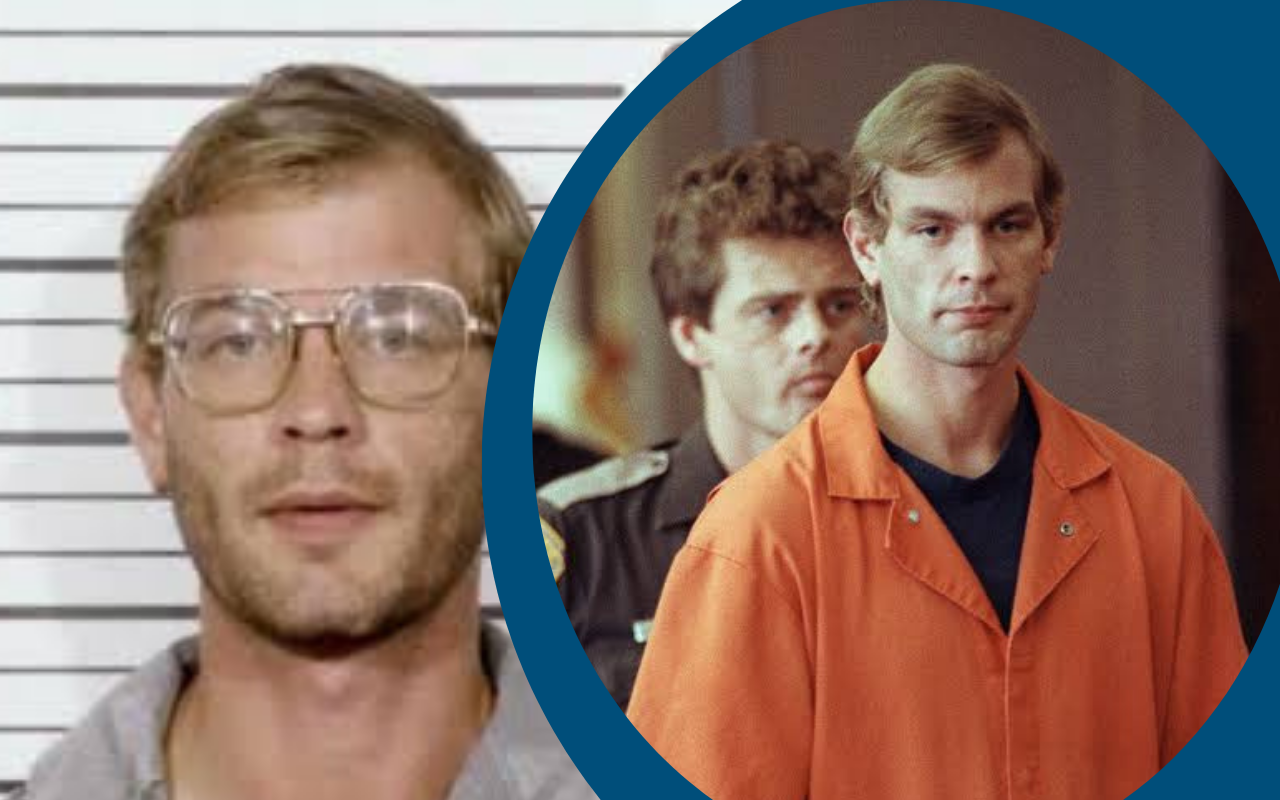
The most recognized image of Jeffrey Dahmer is his police booking photograph taken after his arrest in Milwaukee in July 1991. This mugshot quickly appeared in newspapers and television broadcasts across the United States and later around the world.
His arrest occurred after Tracy Edwards escaped from Dahmer’s apartment and alerted police. Officers investigating the apartment discovered overwhelming evidence that linked Dahmer to numerous murders, leading to one of the largest criminal investigations in Milwaukee’s history.
The booking photograph became the defining image associated with Dahmer’s case because it marked the moment when years of undiscovered crimes finally came to an end. Today, it remains one of the most frequently reproduced historical images in true crime reporting.
Courtroom Photographs and Media Coverage
Following his arrest, Jeffrey Dahmer appeared in numerous court hearings throughout 1991 and 1992. During these proceedings, photographers documented his appearances as journalists covered every stage of the legal process.
Courtroom images typically show Dahmer seated beside his attorneys, listening to testimony, or entering and leaving the courtroom under police supervision. These photographs became widely published because the trial attracted enormous national and international attention.
News organizations used these images to report developments in the case, while later documentaries and educational programs continued using courtroom photographs to illustrate the legal process surrounding one of America’s most significant criminal prosecutions.
Why Jeffrey Dahmer Pictures Remain Popular
Interest in Jeffrey Dahmer photographs continues for several reasons. True crime documentaries, books, podcasts, television dramatizations, and historical research have introduced new audiences to the case.
Many people search for these images because they are studying criminal history or watching documentaries about the investigation. Others are interested in understanding how one of the most notorious criminal cases unfolded through official photographs and historical records.
It is important to remember that these photographs are historical documents. Their purpose is to help explain events, preserve public records, and support accurate reporting rather than glorify criminal behavior.
Public Archives and Historical Collections
Many Jeffrey Dahmer photographs are preserved in public archives maintained by newspapers, photo agencies, government records, and documentary collections. These archives include police booking photographs, courtroom images, yearbook portraits, and editorial photographs published during the investigation.
Libraries, museums, and academic researchers often rely on these historical images when examining criminal justice, forensic investigation, media reporting, and law enforcement history. Licensed editorial collections ensure that these photographs remain available for educational and journalistic purposes while maintaining accurate historical documentation.
Because the case remains significant in American legal history, many of these photographs continue to appear in documentaries, books, and educational programs discussing criminal investigations and forensic science.
The Lasting Legacy of the Case
Although Jeffrey Dahmer’s photographs continue to attract public attention, the lasting legacy of the case is not the images themselves but the lessons learned from the investigation. The crimes prompted changes in police procedures, increased discussions about missing persons investigations, and renewed attention to how vulnerable communities are protected.
The case has also encouraged researchers, criminologists, psychologists, and legal experts to study violent criminal behavior in hopes of improving prevention, investigation, and victim support. Modern documentaries increasingly emphasize the lives of the victims and the impact on their families rather than focusing solely on the offender.
Historical photographs remain part of this broader record, documenting the investigation and legal proceedings while reminding future generations of the importance of justice, accountability, and public safety.
Conclusion
Searches for “Jeffrey Dahmer pictures” reflect continuing public interest in one of the most extensively documented criminal investigations in modern American history. From childhood family photographs and school portraits to police mugshots and courtroom images, these photographs provide a visual timeline of a case that profoundly affected victims’ families, law enforcement, and the criminal justice system.
Rather than viewing these images simply as photographs of an infamous individual, they should be understood as historical records connected to a major criminal investigation. They help explain how the case unfolded, how justice was pursued, and why it continues to be studied decades later. Remembering the victims, supporting accurate historical reporting, and learning from the investigation remain the most meaningful ways to understand the significance of the photographs associated with Jeffrey Dahmer’s life and crimes.




Leave a Reply