
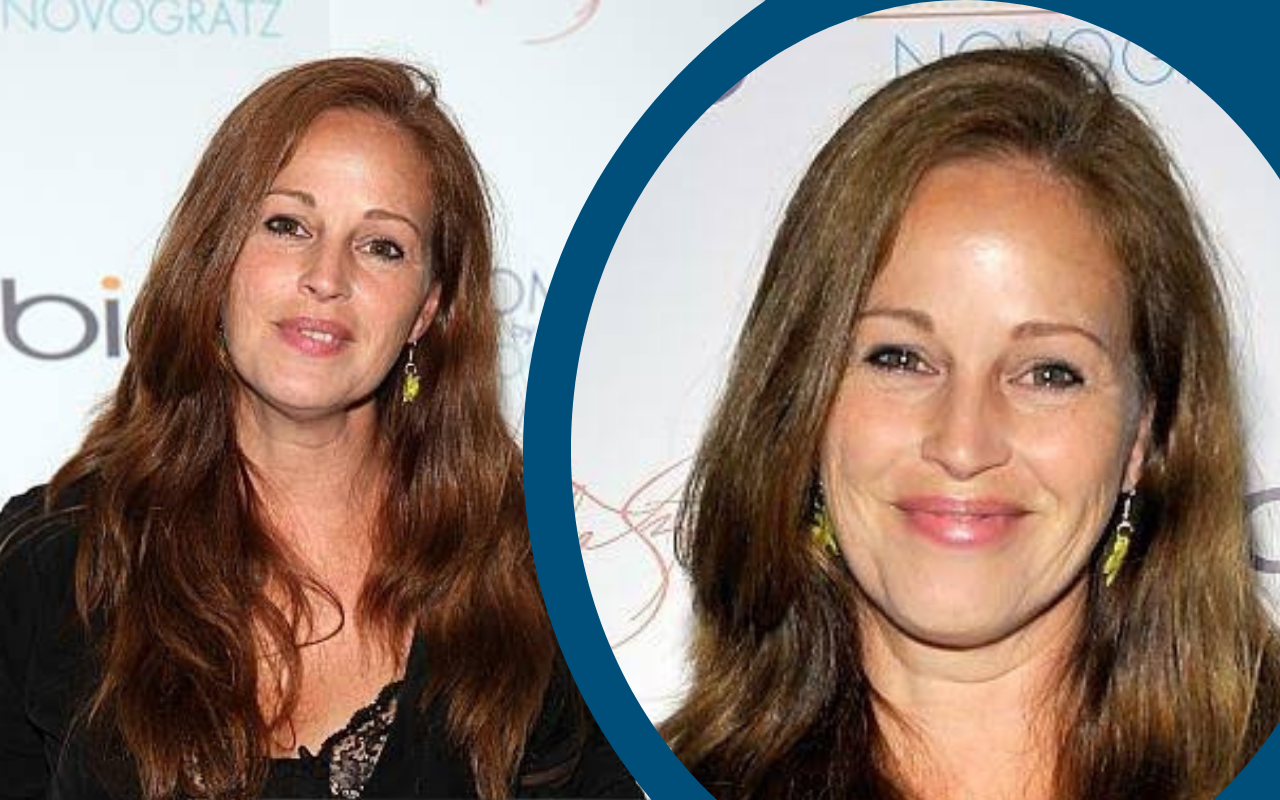
Introduction
Marla Hanson is a former American model, writer, filmmaker, and victims’ rights advocate whose life changed dramatically after a violent attack in New York City in 1986. At the time, Hanson was building a promising career in modeling and entertainment. She had already appeared in fashion publications and was pursuing opportunities in television. The attack left her with permanent facial scars and forced her to reconsider the direction of her professional and personal life.
What followed was not simply a story of recovery from a violent crime. Hanson went on to study filmmaking, work in film and television, raise a family, participate in advocacy for crime victims, and speak publicly about her experience. Her story later reached television audiences through The Marla Hanson Story and received renewed attention when she appeared on Netflix’s Skin Decision: Before and After in 2020.
Today, Hanson is remembered not only as a survivor of a highly publicized crime but also as someone who rebuilt her life and used her experience to encourage greater awareness of victims’ rights.
Early Life and Move Toward Modeling
Marla Hanson was born on June 18, 1961, in Independence, Missouri. Details about her childhood and family life are relatively limited, but her professional journey eventually brought her from the Midwest to New York City. Before becoming established as a model, she reportedly worked in other fields, including real estate and insurance.
Her move toward modeling reflected an ambition to build a career in the entertainment and fashion industries. New York was an important center for advertising, fashion, television, and publishing, making it an attractive destination for someone seeking professional opportunities.
By the mid-1980s, Hanson had begun developing a modeling career. She reportedly worked with Petite Model Management and appeared in fashion publications including Mademoiselle and Glamour. She also had opportunities connected to television advertising.
Her career was still developing, but there were signs that she could build a broader future in entertainment. That progress was interrupted by an event that would permanently change her life.
The 1986 Attack That Changed Everything
On June 5, 1986, Hanson was attacked in Manhattan after meeting her former landlord, Steven Roth. Contemporary reports described a dispute involving an $850 security deposit, while prosecutors also argued that Roth had unwanted romantic interest in Hanson.
Two men attacked Hanson with a razor, causing severe injuries to her face. She required extensive medical treatment and numerous stitches. The injuries left permanent scars and had an immediate effect on both her physical appearance and her professional prospects.
The attack attracted national attention because of its brutality and because Hanson was a young model whose appearance was closely connected to her career. Newspapers reported extensively on her condition and the circumstances surrounding the assault.
Yet Hanson demonstrated determination from the beginning. Even while recovering, she expressed an intention to continue with her professional ambitions rather than allow the attack to completely destroy her plans.
The physical injuries were only one part of the aftermath. Hanson also had to deal with emotional consequences, public attention, legal proceedings, and the difficult process of rebuilding her confidence.
The Criminal Case and Court Proceedings
The criminal investigation eventually led to trials involving the men accused of carrying out and arranging the attack. Steven Bowman and Darren Norman were accused of attacking Hanson, while Steven Roth was accused of arranging the assault.
Hanson became an important witness during the legal proceedings. Her testimony described the attack and its circumstances, while the prosecution sought to establish the connection between Roth and the men who carried out the assault.
The case attracted considerable attention because of the seriousness of the injuries and the unusual circumstances surrounding the alleged motive. Hanson’s experiences in court also became part of the wider discussion about how victims of violent crime were treated during legal proceedings.
The defendants were ultimately convicted in connection with the assault. The case helped make Hanson a nationally recognized figure, but the attention came at a significant personal cost.
Rather than remaining focused solely on the criminal case, Hanson eventually began looking for ways to build a future beyond what had happened to her.
Leaving Modeling and Discovering Filmmaking
The attack inevitably affected Hanson’s modeling career. Modeling depends heavily on appearance, and the permanent facial scars made it difficult for her to return to the profession in the same way.
However, Hanson did not abandon the entertainment industry completely. Instead, she moved toward filmmaking and developed interests behind the camera.
She later attended New York University’s Tisch School of the Arts, where she studied film production and graduated in 1994. This represented a significant professional transition. Instead of relying on modeling and appearances, Hanson began developing skills in writing, production, and storytelling.
Her later work included involvement with film and television projects. Sources credit her with work associated with films such as The Addiction and The Funeral, while she also received writing credits connected with The Blackout and the television project Subway Stories.
This career change demonstrated that the attack had not ended her connection with creative work. Instead, it redirected her toward a different area of the entertainment industry.
The Marla Hanson Story
Hanson’s experience eventually became the subject of the television movie The Marla Hanson Story, which was released in 1991.
The production brought her experience to a wider audience and dramatized the events surrounding the attack and its aftermath. Television movies based on real events were particularly effective at bringing stories of crime and survival into people’s homes, and Hanson’s case had already received substantial media coverage.
The film also helped preserve public awareness of the case. Hanson was no longer simply a former model whose career had been interrupted; she had become a symbol of survival and resilience after violent crime.
Although dramatizations cannot capture every detail of a person’s real experience, the production helped introduce audiences to the challenges Hanson faced after the attack.
Her story also raised broader questions about appearance, identity, violence against women, and the difficulties victims face when trying to rebuild their lives.
Advocacy for Crime Victims
One of the most significant developments in Hanson’s later life was her involvement in victims’ rights advocacy.
Her own experience gave her a direct understanding of the difficulties victims can face after violent crimes. Instead of keeping the experience entirely private, she became involved in efforts to improve support and protections for other victims.
A 2009 New York State Senate resolution recognized Hanson for her advocacy work and described her as an effective advocate for crime victims. The resolution highlighted her involvement in efforts concerning victims’ rights and legislative issues.
This part of Hanson’s life is especially important because it demonstrates how she transformed a deeply painful personal experience into public service.
Her advocacy also changed the way her story could be understood. The focus was no longer simply on the attack or her scars. Instead, her experience became part of a larger conversation about justice, recovery, and the treatment of people who survive violent crimes.
Family and Personal Life
Despite the considerable publicity surrounding her attack, Hanson has generally maintained a relatively private personal life. She married Douglas Kenneth Howell in 1997, and public biographical information indicates that they have one child.
Her family life represents another chapter of the story that is often overlooked when discussing her past. The attack happened when she was a young woman beginning her career, but it did not prevent her from later developing relationships, creating a family, and pursuing other ambitions.
Hanson’s preference for privacy has also meant that detailed information about her current family circumstances is limited. That privacy is understandable given the enormous public attention she experienced during the 1980s and 1990s.
Rather than continually appearing in the media, she has largely chosen to live outside the celebrity spotlight.
Appearance on Skin Decision
In 2020, Hanson appeared on Netflix’s Skin Decision: Before and After. The program focused on cosmetic and medical treatments for people seeking changes related to their appearance.
Her participation brought renewed attention to her story, particularly to the facial scars she had carried since the 1986 attack.
For Hanson, the issue was much deeper than ordinary cosmetic concerns. Her scars were physical reminders of a violent experience that had affected her career, confidence, and public identity for decades.
The program gave viewers an opportunity to see a later stage of her journey. It also introduced her story to people who may not have known about the original attack or the legal case.
Her appearance demonstrated that recovery can continue long after the immediate medical treatment has ended. Physical scars can remain for decades, and people may choose different approaches to living with or treating them.
Marla Hanson Today
Interest in “Marla Hanson today” continues because people who remember her story naturally wonder what happened after the intense media coverage of the 1980s and 1990s.
As of 2026, Hanson appears to maintain a largely private life. Her known public history includes her work in filmmaking, writing, advocacy, and her appearance on Skin Decision. She is no longer associated with the modeling career she was pursuing before the attack.
There is limited reliable information about her current daily life, occupation, residence, finances, or family activities. For that reason, claims circulating online about her present circumstances should be treated carefully unless they can be supported by trustworthy sources.
What can be established is that Hanson did not allow the attack to become the final chapter of her life. She pursued higher education, developed a new professional direction, built a family, and became involved in advocacy.
Her story therefore extends far beyond the crime itself.
Conclusion
Marla Hanson’s life is a story of resilience, professional reinvention, and advocacy. In 1986, she was a young model building a career in New York when a violent attack left her with permanent facial scars and changed the direction of her life.
The years that followed were challenging, but Hanson refused to remain defined by what had happened to her. She moved from modeling toward filmmaking, studied at NYU’s Tisch School of the Arts, worked in entertainment, and eventually became involved in victims’ rights advocacy.
Her story reached television audiences through The Marla Hanson Story, while her 2020 appearance on Skin Decision: Before and After introduced her experience to a new generation. Most importantly, her advocacy demonstrated how personal adversity can inspire efforts to help others.
Today, Hanson remains a largely private person. Although many people continue searching for information about her present life, the most meaningful part of her story is the journey she made after tragedy. Her career, family, creative work, and advocacy show that a traumatic event can profoundly change a person’s path without determining the whole of their future.




Leave a Reply